 InkHeart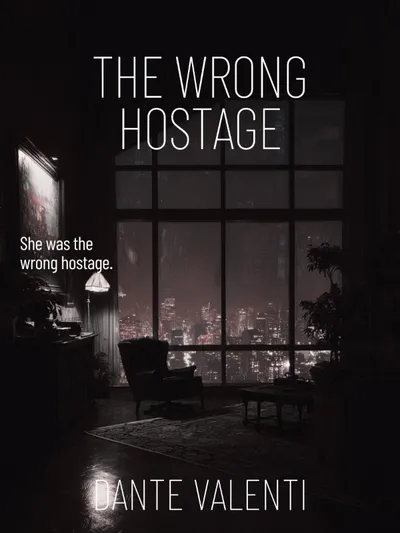
The Wrong Hostage
Chapter 1
Eva
The scream dies in my throat, smothered by a rough, leather-gloved hand. One moment, I’m walking under the sputtering orange glow of a streetlight, the cool Chicago mist clinging to my jacket, my mind replaying Professor Albright’s smirking dismissal of my thesis proposal. The next, my world is canvas and pain.
A thick arm hooks around my waist, lifting me off my feet as if I weigh nothing. My messenger bag, filled with library books on pigment analysis, slides off my shoulder and hits the wet pavement with a muffled thud. I kick, my heel connecting with a hard shin, and a grunt of pain is my only reward before my legs are swept out from under me. I’m thrown into the dark belly of a vehicle. The door slams shut, sealing me in a world of darkness and the smell of stale coffee and cheap vanilla air freshener.
The engine roars to life. I scramble to my knees, my hands searching for a handle, a lock, anything. A coarse burlap sack is shoved over my head, rough against my cheeks and smelling of dust and mildew. My hands are yanked behind my back, the sharp bite of a zip tie cinching my wrists together. Panic, cold and sharp, tries to claw its way up my windpipe. I force it down. Breathe. Just breathe.
Think. Don’t feel.
This is a data-gathering exercise. That’s what I tell myself. The van lurches forward. I try to track the turns. Right, then a long straightaway. Another right. Left. It’s useless. I’m completely disoriented. My cheek is pressed against the cold metal floor, the vehicle’s vibrations rattling my teeth.
This makes no sense. I’m a graduate student. My bank account is a joke. My parents are retired teachers in Ohio. This isn’t a ransom kidnapping. It can’t be. So what is it? A random, violent crime? The thought sends a fresh wave of ice through my veins.
My mind flees back to the library, to the only violence I’d faced an hour ago, which was purely academic. Professor Albright, leaning back in his worn leather chair, steepled his fingers and looked at me over his spectacles. “Miss Chandler,” he’d said, his tone dripping with condescension, “while your passion for obscure nineteenth-century forgers is… quaint, your theory about microscopic canvas flaws is speculative at best. It lacks the gravitas of established scholarship.”
Gravitas. His favorite word. He used it to crush any idea that didn’t originate from a text written before 1950. He saw a student. A girl. He didn’t see the hours I’d spent with a microscope, the cross-referenced letters, the painstaking work of proving something everyone else had overlooked.
The van slows, descending what feels like a steep ramp. An underground garage. The engine cuts out, plunging us into an echoing silence. My door slides open. A hand grabs my arm, hauling me out. I stumble, my bound legs clumsy. We walk. The air changes, becoming cool and sterile. The muffled click of our footsteps bounces off concrete. Then, a soft chime. An elevator.
We ascend. Smoothly, silently, and for a very long time. This is no grimy warehouse. This is a high-rise. My confusion deepens, warring with my fear. Where are they taking me?
The elevator stops with another gentle chime. We walk again, this time on something soft. A plush carpet. A key card beeps, and a heavy lock clicks open with the sound of well-oiled machinery. I’m pushed forward into a room, and the door closes behind me with a solid, definitive thud. For a long moment, I’m left standing in the suffocating darkness of the hood.
Then, hands are on me again. A blade slices through the zip tie on my wrists, and my hands fall free, tingling with the rush of blood. The burlap sack is pulled from my head. I blink, my eyes struggling to adjust to the light. I gasp. My breath catches in my lungs, not from fear, but from sheer, unadulterated shock.
I’m not in a basement. I’m not in a cell. I am standing in the most magnificent suite I have ever seen. It’s not a room; it’s an entire floor. Floor-to-ceiling windows wrap around the space, showcasing a glittering, panoramic vista of the Chicago skyline at night. The lights of the city spread out below like a carpet of fallen stars. The floors are polished marble. The furniture is sleek, modern, and looks impossibly expensive. On the wall opposite me hangs a painting. My art historian’s brain automatically catalogues it: a large abstract piece, bold slashes of cobalt and crimson, vaguely reminiscent of a late-period de Kooning but clearly an original by a contemporary artist of immense talent.
My kidnappers are gone. I am alone.
My heart is hammering, a frantic bird trapped in my ribs. I move cautiously, my bare feet sinking into a cream-colored rug that must have cost more than my entire graduate education. I touch the back of a grey velvet sofa. It’s real. This is all real. I run to the wall of windows, my palms pressing against the cool, thick glass. It doesn’t budge. It feels inches thick. Sound-proofed. I am in a luxurious, silent cage in the sky.
On a low marble table sits a single bottle of Fiji water and a glass. My throat is sandpaper. I twist the cap and drink, the cool liquid a small comfort in this insane reality. I explore the rest of the space. It’s a penthouse, complete with a state-of-the-art kitchen with appliances that gleam, untouched. The bedroom is dominated by a king-sized bed with a mountain of pillows and sheets that look like spun silk. A walk-in closet is open, and inside, I see clothes. Not my clothes. There are simple, elegant dresses, cashmere sweaters, silk pajamas. All in my size. On a vanity, toiletries are arranged with hotel-like precision: expensive soaps, lotions, a new toothbrush still in its package.
They prepared this for me.
The thought is more terrifying than a dirty cellar and a single lightbulb. A random attack doesn’t come with a curated wardrobe and artisanal toiletries. This was planned. It was meticulous. But it must be a mistake. They have the wrong person. They must be looking for some heiress, some socialite, not a broke student who spends her nights hunched over obscure archival documents.
I check the door. It’s a solid slab of dark wood with no visible handle on my side, just a smooth, featureless panel. There is no escape. I am a specimen in a jar. A butterfly pinned to velvet. For hours, I wait. The adrenaline fades, replaced by a bone-deep, weary dread. I sit on the edge of the bed, the silk comforter cool against my skin, and watch the distant lights of traffic crawl across the city below. I try to hold onto the anger, the defiance I felt thinking about Professor Albright, but it’s slipping away, eroded by the sheer, bizarre opulence of my prison. The luxury is a weapon, designed to unnerve, to make me feel small and powerless. It’s working.
Then, a sound. A faint click from the hallway. A deadbolt, heavy and final, sliding back. My entire body goes rigid. My breath hitches. I stand up slowly, my hands clenched into fists at my sides, and face the door. It swings inward with a silent, expensive whisper.
A man stands in the doorway. He is not a thug. He is not a brute. He is tall, dressed in a perfectly tailored charcoal suit that probably costs more than my car. His dark hair is styled with effortless precision, and his face is all sharp angles and stark, uncompromising beauty.
He looks like a fallen angel carved from marble and disdain. But it’s his eyes that stop my breath. They are the color of a winter storm, cold and assessing, and they sweep over me with an unnerving intensity, taking in my cheap jeans, my frayed university sweater, my terrified posture. He doesn’t move. He doesn’t speak. He just looks at me, and in his chilling, silent gaze, I feel myself being weighed, measured, and found wanting.
Chapter 2
Eva
His stillness is a threat. It’s in the perfect cut of his suit, the lethal calm of his hands, the way his eyes catalogue me not as a person, but as a problem to be solved.
I force my chin up. My heart is a frantic drum against my ribs, but I will not show him the terror that’s trying to choke me.
He takes a step into the room, and the door swings silently shut behind him. The lock engages with a soft, final click. We are alone.
“My name is Nathan Wilde,” he says. His voice is low, a smooth baritone laced with gravel, completely devoid of emotion. It’s the kind of voice that gives orders and expects them to be followed without question.
I remain silent. The name means nothing to me, and I refuse to give him the satisfaction of asking.
“You’ve been remarkably calm,” he continues, his gaze unwavering. “Most women would be screaming.”
“Would that help?” I ask, my own voice tight but steady.
A flicker of something, maybe surprise, crosses his features before it’s gone. “No. It would not.”
He walks slowly toward the center of the room, his movements fluid, predatory. He stops by the marble coffee table, his back partially to me.
“Let’s not waste time with games, Isabella,” he says, his voice taking on a sharper edge. “Your father has been expecting my call.”
Isabella. The name hangs in the air between us. It’s a key. It’s the answer to everything. This is a mistake.
“My father,” I say, the words coming out clipped and precise, “is a retired history teacher in Ohio. I believe the only call he’s expecting is about his new cable installation.”
He turns his head slightly, his profile sharp against the city lights. “That’s a foolish thing to say.”
“It’s the truth.” I take a small, defiant step forward. “You have the wrong person.”
“My men do not make mistakes.” The words are flat. A statement of absolute fact in his world.
“Then you need better men.”
That gets his full attention. He turns to face me completely, and for the first time, I see the mask of control slip. A fissure of cold fury appears in his eyes. He stalks toward me, closing the distance until he’s only a few feet away. I can smell the faint, clean scent of his cologne, something expensive and subtle, like bergamot and cedar.
“What is your name?” he commands.
“Eva Chandler.”
He stares at me, searching my face for a lie. He finds none. His gaze drops to the worn messenger bag my abductors must have thrown on the floor near the door. It’s the bag I dropped on the street. He walks over to it, bends down, and unzips it with one swift motion. He pulls out my worn copy of ‘The Chemistry of Color’ and my student ID.
He looks at the plastic card, his thumb brushing over my grainy photo. He looks from the picture to me, and then back again. The silence in the room stretches, becoming thin and sharp. I can almost feel the temperature drop as his fury solidifies into something much more dangerous: certainty. The certainty that his men have, in fact, made a colossal error.
He straightens up, the ID card held between two fingers. He doesn’t throw it. He doesn’t crush it. He simply places it on the marble table with chilling precision.
“It would seem,” he says, his voice now dangerously soft, “that I owe you an apology.”
The words are polite. The tone is lethal.
“An apology?” My laugh is a dry, shaky sound. “I think we’re a little past that. You can start by letting me go.”
He turns his back on me and walks to the wall of windows, staring out at the glittering skyline. His shoulders are rigid, his hands clenched into tight fists at his sides. He’s a statue of barely contained violence.
“Let you go,” he repeats, the words a hollow echo. He turns back, his face an unreadable mask of stone. “You have seen this apartment. You have seen my face. Letting you go is not an option.”
Ice floods my veins. This is it. The point where a mistake becomes a loose end. A loose end that needs to be tied up. Permanently.
“So you’re going to kill me because your hired thugs are incompetent?” I challenge, my voice rising despite my best efforts to control it. “Because they can’t tell the difference between a student and… whoever Isabella is?”
“Lorenzo Rossi’s daughter,” he supplies, his eyes narrowed. “And my men’s incompetence will be dealt with. That is my problem. You, Miss Chandler, are my other problem.”
He begins to pace, a caged tiger in a bespoke suit. “Tell me everything. Why were you on that street, at that time?”
“I was walking home.”
“From where?”
“The university library. I’m a graduate student.”
He stops pacing and looks at me, a new kind of interest in his eyes. The predator is reassessing its prey. “What do you study, Eva Chandler?”
“Art history.”
His eyebrow quirks, just slightly. It’s the first unguarded expression I’ve seen on him. “Art history.”
“Yes,” I say, a flicker of my old academic indignation surfacing. “My specialization is in pigment analysis and the detection of nineteenth-century forgeries.”
The word hangs in the air. Forgeries.
His intense focus sharpens, like a lens clicking into place. The fury in his eyes is replaced by a keen, calculating light. The entire atmosphere in the room shifts. The immediate threat of violence recedes, replaced by something far more complex and unnerving.
“You detect forgeries,” he says. It is not a question.
“I do. My thesis is on identifying fakes by analyzing microscopic flaws in the canvas weave, a technique most authenticators overlook.” I don’t know why I’m telling him this, why I’m offering up this piece of myself, except that it’s the only ground where I feel powerful.
He is silent for a long moment. His gaze drifts from me to the large abstract painting on the wall, then back to me.
“That painting,” he says, nodding toward the splash of cobalt and crimson. “Tell me about it.”
Is this a test? My mind races. I walk closer to the piece, my professional instincts taking over, a welcome shield against the fear.
“It’s not a de Kooning, if that’s what you’re thinking,” I begin, my voice finding its familiar, confident rhythm. “The artist is clearly a student of his work, though. You can see the influence of the ‘Woman’ series in the violent energy of the brushstrokes. But the impasto technique is different. Thicker, more deliberate. This is an homage, not a copy. The artist is confident, talented, and knows their own worth.”
I glance back at him. “It’s also incredibly expensive.”
Nathan Wilde stares at me, his expression unreadable. The dangerous energy that had crackled around him has settled into a deep, unnerving calm. He is no longer looking at me as a mistake. He is looking at me as if I am an equation he is suddenly, unexpectedly, on the verge of solving.
“You are very observant, Miss Chandler.”
“It’s my job to be,” I reply, holding his gaze.
“Indeed.”
He walks toward the door, his purpose absolute. My heart seizes. Is he leaving? What happens now?
He stops, his hand on the smooth, handleless panel. “I have a business arrangement. A very important one. It hinges on the acquisition of a particular piece of art.”
He turns to face me, his storm-grey eyes pinning me in place. “Its authenticity is… paramount.”
The implication is terrifying. It’s absurd. It’s my only way out of this alive.
“You can’t be serious,” I whisper.
“I am always serious,” he counters, his voice a silken threat. “The world’s most renowned expert has already given his opinion. But I find myself in need of a second one. Someone who specializes in… overlooked flaws.”
My mind is spinning. Captor to client? Hostage to consultant? The absurdity is breathtaking.
“You kidnapped me,” I state, the words feeling inadequate.
“A regrettable, and as it turns out, potentially fortuitous error,” he says, a ghost of a smile touching his lips. It does not reach his eyes. “Get some rest. We have much to discuss in the morning.”
The door slides open. He steps out, not looking back.
“Wait,” I call out, my voice desperate. “What if I say no?”
He pauses in the doorway and looks back at me, his face once again a cold, handsome mask. The warmth from his near-smile is gone, leaving only a chilling certainty.
“Then my men will have made two mistakes tonight,” he says softly. “And I only tolerate one.”
The door closes, and the lock clicks into place, sealing me back inside my gilded prison. But everything has changed. The randomness is gone. The simple fear is gone. In its place is a terrible, complicated choice. And the chilling realization that my life now depends on my ability to spot a fake.
Chapter 3
Nathan
The door to the penthouse slides shut, the lock clicking into place like the cocking of a hammer. I stand in the private hallway for a moment, the echo of her final question hanging in the air.
*What if I say no?*
My answer was a threat. A necessity. But the question itself… it was not born of hysterics. It was born of logic. A calculated inquiry into her options.
I turn and walk down the hall, my footsteps silent on the thick carpeting. My security chief, Dimitri, is waiting for me by the elevator. His face is a granite mask, but I can see the tension in his jaw. He knows.
“The car is ready,” he says, his voice a low rumble.
“Cancel it.” I don’t look at him. I stare at the brushed steel of the elevator doors. “Tell me again how this happened.”
“Sir, the target profile was a match. Height, hair color, general build. She was walking on the specified route, at the specified time.” Dimitri’s voice is clipped, professional. He is reporting a mechanical failure, not a catastrophic human error.
“General build?” I finally turn to face him. I keep my voice quiet. A shout is a loss of control. This quiet is far more terrifying, and he knows it. “Lorenzo Rossi’s daughter spends her afternoons with a personal trainer and her evenings at charity galas. My men grabbed a graduate student carrying a bag of library books. Explain the discrepancy.”
“It was dark. Raining. A mistake was made.”
“A mistake,” I repeat the word, letting it taste like poison. “You bring me a civilian. A nobody. You put her in my penthouse, show her my face, and you call it a ‘mistake’.”
“We are prepared to rectify it.”
I know what ‘rectify’ means. A quiet disposal. A body that never surfaces. It is the logical, clean solution. It is also impossible.
“No.” The word is final.
Dimitri’s composure cracks for a fraction of a second. A flicker of surprise. “Sir? She is a witness.”
“She is an innocent,” I correct him. “My rules on that are not flexible. You know this.”
“Of course. But the risk…”
“The risk is my problem to manage. Your problem is the team that failed. I want them gone. Not dead. I want them disgraced and sent so far away they forget what this city looks like.”
“It will be done.”
“And Dimitri,” I add, as the elevator arrives with a soft chime. “Find out everything there is to know about Eva Chandler. Her family, her friends, her professors, her favorite brand of coffee. I want to know what she dreams about at night. I want it on my desk in one hour.”
He nods, his face grim. “Yes, sir.”
I step into the elevator alone. The ride down to my own residence, two floors below, is silent. My mind is a storm. The plan was simple, brutal in its elegance. Squeeze Lorenzo Rossi by taking his only daughter, Isabella. Force his hand, make him cede control of the southern shipping ports. A move that would have crippled his empire and cemented my own.
Instead, I have Eva Chandler. An art history student.
In my office, I pour a glass of whiskey, the amber liquid catching the light. I don’t drink it. I just hold the heavy crystal tumbler, the cold seeping into my palm. On the large screen that dominates one wall, I pull up the security feed from the penthouse suite. One-way, of course. She has no idea she’s being watched.
She is not crying. She is not screaming or throwing things. She is pacing. She walks the length of the living area, her arms crossed, her brow furrowed in concentration. She is not a victim succumbing to fear. She is a strategist trapped behind enemy lines, assessing her cage.
She stops in front of the large abstract painting she analyzed for me. She tilts her head, her gaze sharp, critical. Even now, in this impossible situation, the scholar in her is working. She sees the world as a series of details, of textures and compositions to be understood.
Her quiet strength is a strange, magnetic force. Isabella Rossi would have been a screaming, crying mess. She would have been a pawn, easily manipulated. This woman… Eva… is a different creature entirely. She is a variable I had not anticipated.
A file notification pings on my screen. Dimitri. Already. I open it. Her life is laid out in cold, digital lines. Eva Chandler, 26. Parents in Ohio, retired. No siblings. Top of her class. A mountain of student debt. A single, glowing recommendation from a renowned art conservationist she interned with. The report from her professor, Albright, is dismissive, calling her theories ‘unorthodox’ but her methods ‘obsessively meticulous’.
Obsessively meticulous. The words snag in my mind.
I minimize her file and pull up another. This one contains a single, high-resolution image of a painting. ‘The Lost Star of St. Petersburg’. A rumored masterpiece by a reclusive 18th-century master, lost for two hundred years. It is the centerpiece of a private auction next week. An auction Lorenzo Rossi has staked his reputation and a significant portion of his liquid assets on winning.
My plan was to let him win. Let him bankrupt himself acquiring what my sources tell me is a brilliant fake. A forgery so perfect it has already fooled the world’s foremost expert, a man named Julian Croft. Rossi believes acquiring the Lost Star will give him the prestige to secure new lines of credit, new investors. I know it will be the final nail in his coffin.
I stare at the image of the painting. The detail is exquisite. The brushwork, the craquelure of the aged oils. It is perfect.
Too perfect.
I look from the painting on my screen to the live feed of the woman in my penthouse. She is now in the kitchen, examining the high-end espresso machine as if it’s an artifact in a museum.
*My specialization is in pigment analysis and the detection of nineteenth-century forgeries.*
Her voice in my memory is clear, confident.
*My thesis is on identifying fakes by analyzing microscopic flaws in the canvas weave, a technique most authenticators overlook.*
An idea begins to form. It is reckless. It is unorthodox. It borders on insanity.
To trust a civilian. To bring an unknown quantity into the most delicate and critical business deal of my career. It violates every rule of my world.
But letting her go is a death sentence for my operations. Killing her is a death sentence for my soul. Keeping her locked away indefinitely is just a slow execution, and a waste.
Dimitri’s voice comes through the intercom. “Sir? The arrangements for the team have been made.”
“Good.”
“And for the… witness?” he asks, his hesitation clear.
I look at the screen. Eva has found a notepad and pen left on a counter. She is sitting on a barstool, sketching. Not doodling. She is drawing the skyline, her lines quick and precise. She is not waiting to be rescued. She is documenting. She is working.
What is more valuable? The daughter of my enemy, a predictable leverage point? Or an expert with a niche skill, an ‘obsessively meticulous’ mind that sees what others miss? My men made a mistake. They brought me the wrong woman.
Or maybe, for the first time in their careers, they brought me exactly the right one.
“The witness is no longer a witness, Dimitri,” I say, my eyes fixed on the screen.
“Sir?”
“She is a consultant.”
The silence on the other end of the line is profound. I can picture Dimitri’s confusion, his disbelief.
“We are moving her to the residence wing,” I continue, the plan solidifying with every word. “Give her a suite on this floor. Full access to my library and the digital art archives. Total comfort. But under no circumstances is she to leave. Double the security on this floor.”
“You are bringing her… here?”
“She is an asset, Dimitri. And I am about to put her to work.”
I end the call before he can voice another objection. The decision is made. It is a gamble of the highest order. Placing my trust, and the fate of my empire, in the hands of a stranger I stole from the street.
On the screen, Eva Chandler sets down her pen. She looks toward the door of the penthouse, as if she can feel the change in her own fate. For the first time, a flicker of something raw crosses her face. Not fear. Resolve.
This is a terrible idea.
It is also the most brilliant one I have ever had.